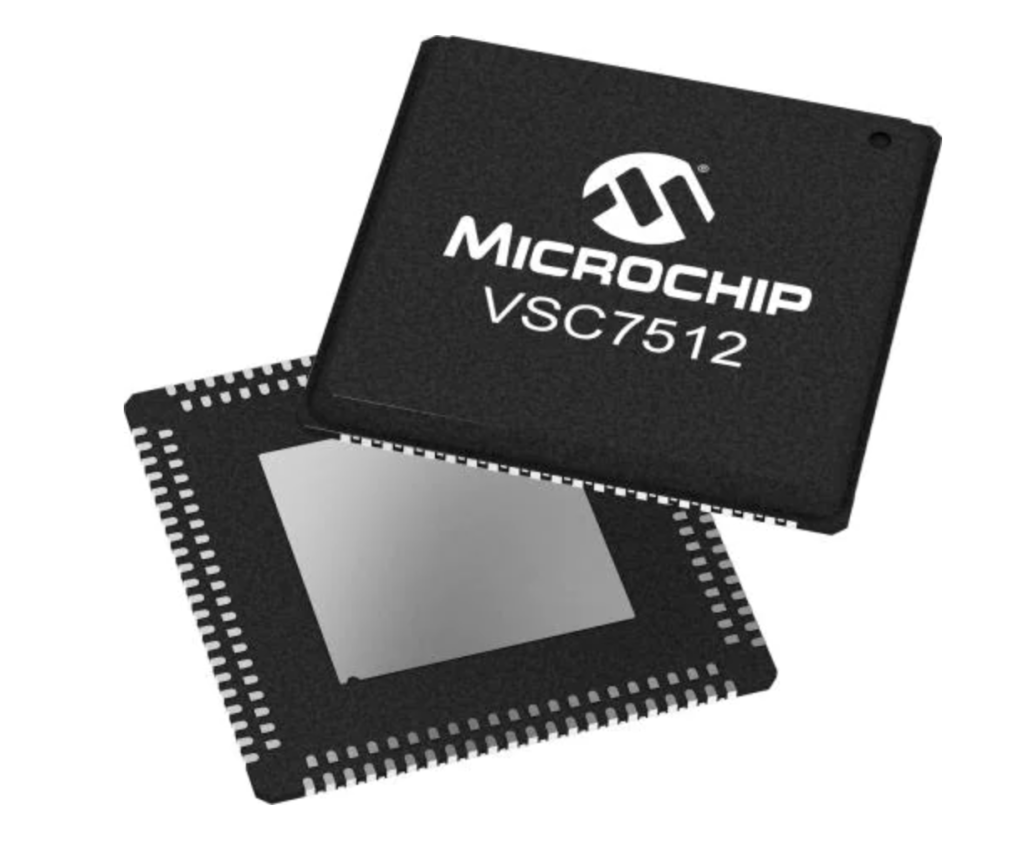
Every IC has a part number, and buried in that string of letters and numbers is a surprising amount of information about what the part is, how it’s packaged, and what conditions it’s rated for. If you know how to read the naming conventions, a part number like “STM32F103C8T6” stops being an opaque code and starts telling you a story.
The catch is that every manufacturer has their own system. There’s no universal standard for IC part numbering. But once you understand the common patterns, you can decode part numbers from most major manufacturers without reaching for the datasheet every time.
The General Structure
Most IC part numbers follow a broadly similar pattern, even though the specifics vary by manufacturer. A typical part number breaks down into segments that tell you: the product family or type, the specific device within that family, the package type, the temperature range, and sometimes the packing method (tape and reel, tube, tray).
For example, take the Texas Instruments part number LM358APWR. “LM358” is the base device — a dual operational amplifier. “A” denotes a specific grade or revision. “PW” is the package code (TSSOP). “R” indicates tape and reel packing. Every segment carries meaning.
Texas Instruments
TI’s part numbering is relatively straightforward. The base part number identifies the device family and function. This is followed by grade/variant suffixes, then a package designator, and finally a packing suffix.
Common TI package codes include: D for SOIC, PW for TSSOP, RGT for QFN, DBV for SOT-23-5, and KGD for known good die. The packing suffix “R” means tape and reel, “E” means partial reel, and “T” means cut tape.
Temperature grades are often embedded in the device variant: no suffix typically means commercial (0 to 70C), “I” means industrial (-40 to 85C), “Q” means automotive qualified (-40 to 125C), and “M” means military (-55 to 125C).
STMicroelectronics
STM part numbers pack a lot of information into a compact format, especially for their STM32 microcontroller family. Take STM32F103C8T6 as an example.
“STM32” identifies it as a 32-bit ARM-based microcontroller. “F” is the product type (general-purpose). “103” is the device subfamily. “C” indicates 48 pins. “8” means 64KB of flash memory. “T” is the package (LQFP). “6” is the temperature range (industrial, -40 to 85C). Change that “6” to a “7” and you get the full -40 to 105C range.
For STM32 devices, memorising the pin-count and flash-size codes is particularly useful because these are the parameters that most often matter when evaluating alternatives or cross-referencing.
NXP Semiconductors
NXP’s numbering conventions vary by product family but follow recognisable patterns. For their LPC microcontroller family, a part like LPC1768FBD100 breaks down as: “LPC1768” for the device family and variant, “F” for the flash memory size code, “BD” for the package type (LQFP), and “100” for the pin count.
For NXP’s discrete and analogue parts, the structure is simpler. Their logic IC families (74-series) follow the industry-standard numbering with NXP-specific package and grade suffixes.
Microchip / Atmel
Microchip’s PIC and AVR families use part numbers that encode the memory size, pin count, and variant. For instance, ATmega328P-PU: “ATmega” is the family (8-bit AVR), “328” relates to the flash size (32KB), “P” indicates the picoPower variant (lower power consumption), and “PU” is the package (PDIP).
Microchip’s package codes include: PU for PDIP, AU for TQFP, MU for QFN, and SS for SSOP. Their temperature suffix convention uses no suffix for commercial, “E” for extended, and “V” for automotive.
The 74-Series Logic Convention
The 74-series logic family has been around since the 1960s, and its numbering convention is nearly universal across manufacturers. A part like SN74HC595N from TI breaks down as: “SN” is TI’s manufacturer prefix (other manufacturers use different prefixes or none at all). “74” identifies it as a commercial-temperature logic device (54 = military temperature). “HC” is the logic family (high-speed CMOS). “595” is the specific function (8-bit shift register). “N” is the package (PDIP).
The logic family prefix is one of the most useful things to recognise: HC is high-speed CMOS, HCT is high-speed CMOS with TTL-compatible inputs, LS is low-power Schottky, LV is low-voltage, and AHC is advanced high-speed CMOS. These tell you about the voltage levels, speed, and power consumption at a glance.
Package Codes to Memorise
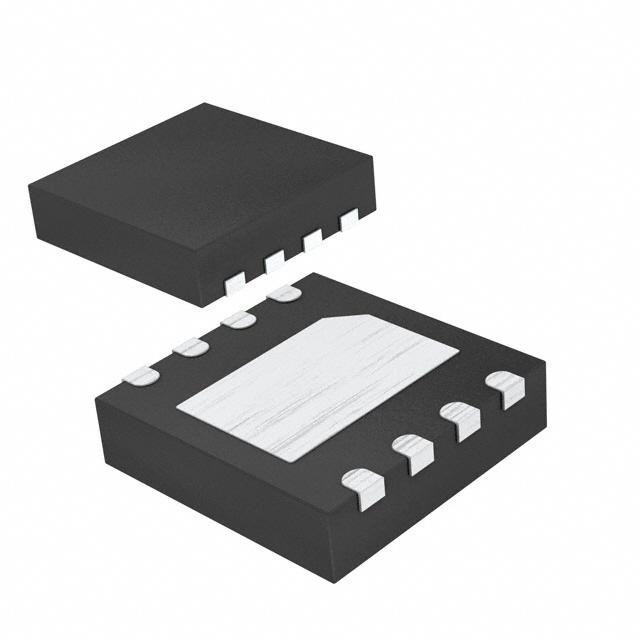
Package codes are the segment of the part number that trips people up most often, because they vary significantly across manufacturers. However, some are nearly universal: SOIC, SSOP, TSSOP, TQFP, QFP, QFN, BGA, SOT-23, SOT-223, and DIP all have recognisable abbreviations or code letters that appear across most manufacturers’ systems.
It’s worth building a personal reference of the package codes you encounter most frequently in your work. After a few weeks of looking them up, you’ll start recognising the common ones automatically.
Why This Matters for Procurement
Being able to decode a part number quickly has practical benefits beyond engineering curiosity. When you’re searching for alternatives to a discontinued part, understanding the structure tells you which segments define the core function (must match) and which define the packaging or grade (can potentially change). When you see a part number on a BOM and need to quickly assess what it is without pulling up the datasheet, the part number itself gives you a head start.
It also helps catch errors. A part number that’s been transcribed with one wrong character might specify the wrong package or temperature range — something you’ll spot instantly if you understand the naming convention, but might miss entirely if the part number is just an opaque string to you.
Need help identifying or sourcing a specific IC? ICCorders has over 12 years of experience navigating the component market. Whether you need help decoding a part number, finding a cross-reference, or sourcing a hard-to-find IC, get in touch — we’re always happy to help.